Case Study
Energy-efficient fume cupboard installation for Colour Synthesis Manchester
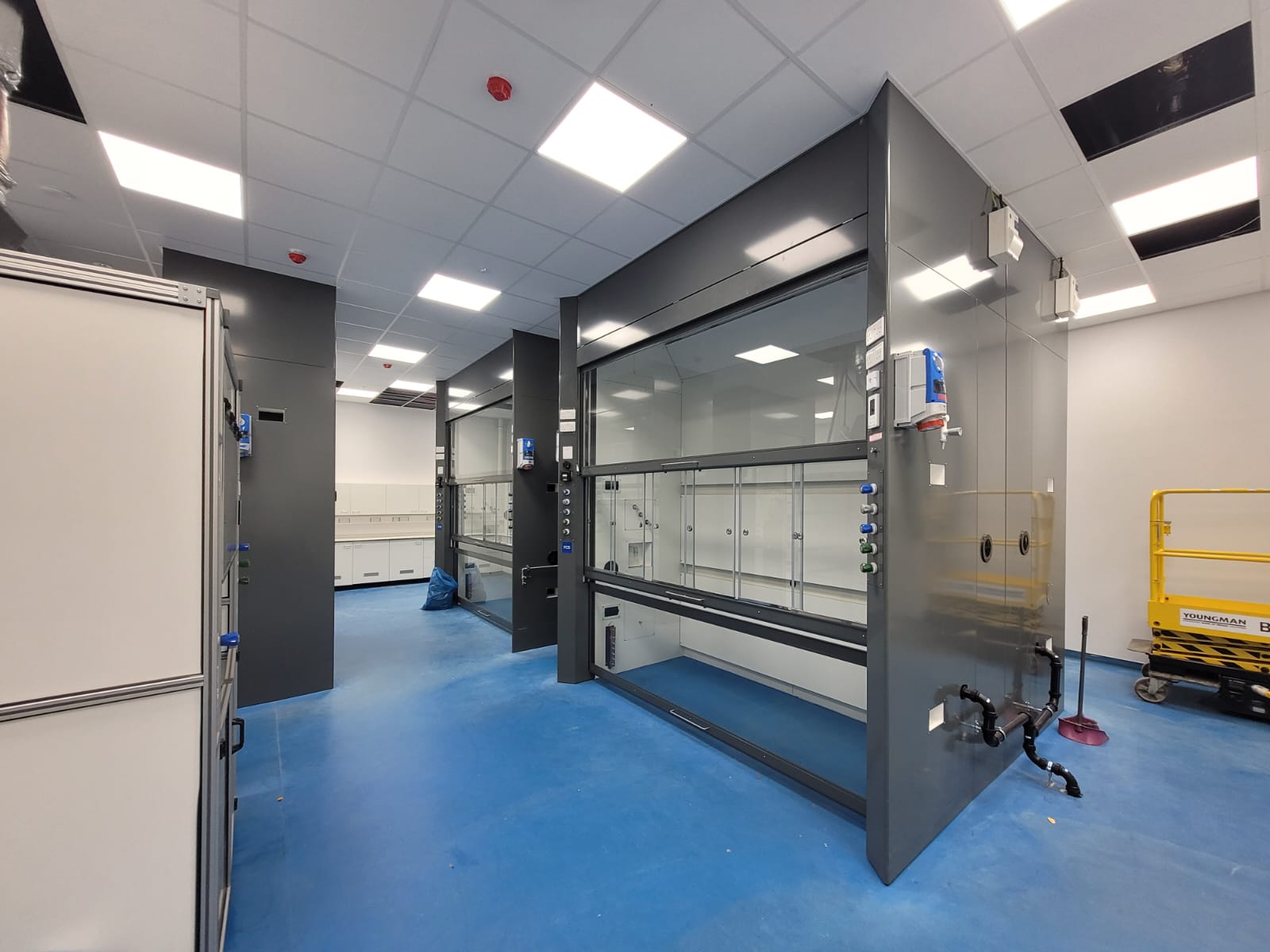
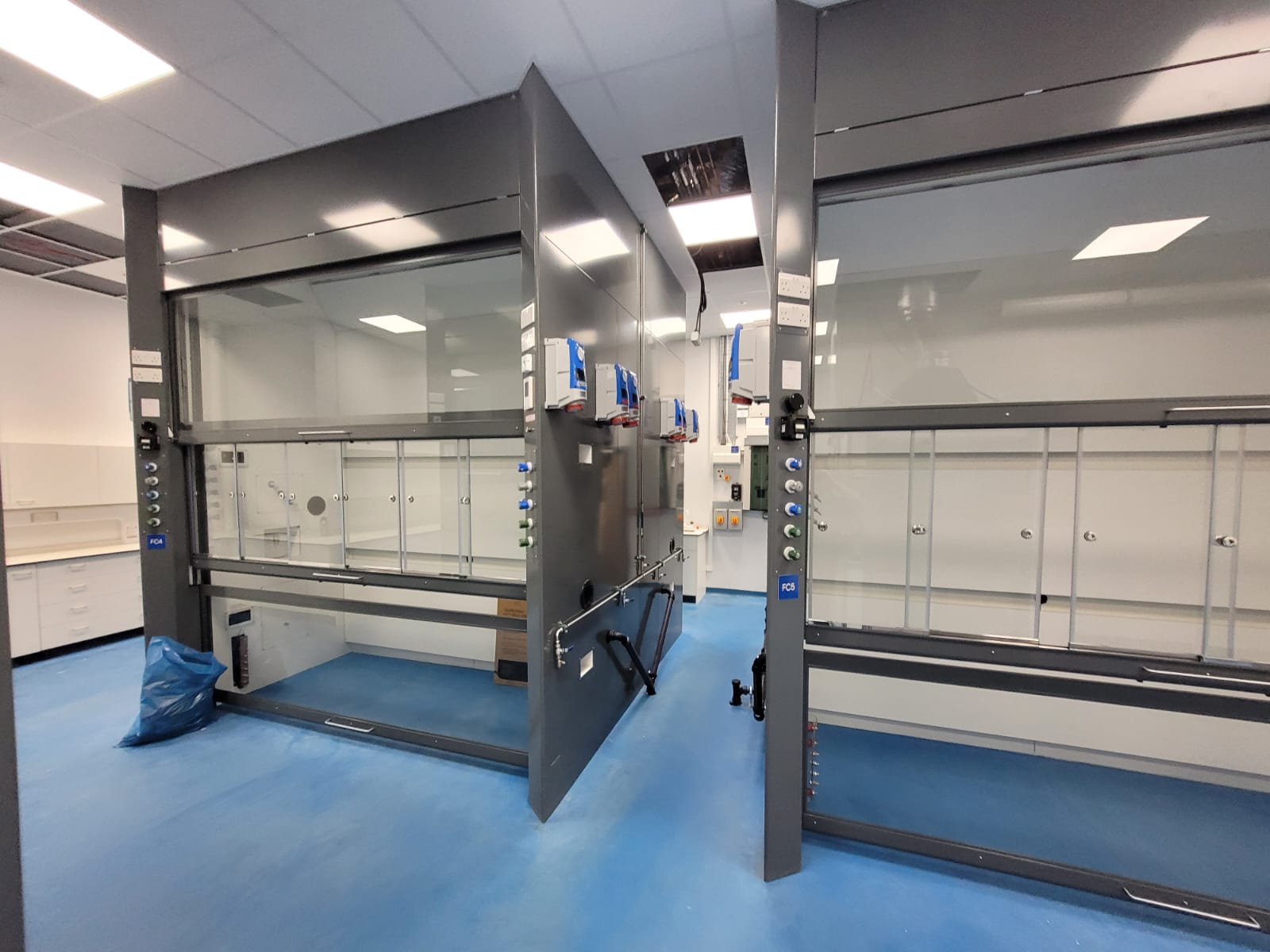
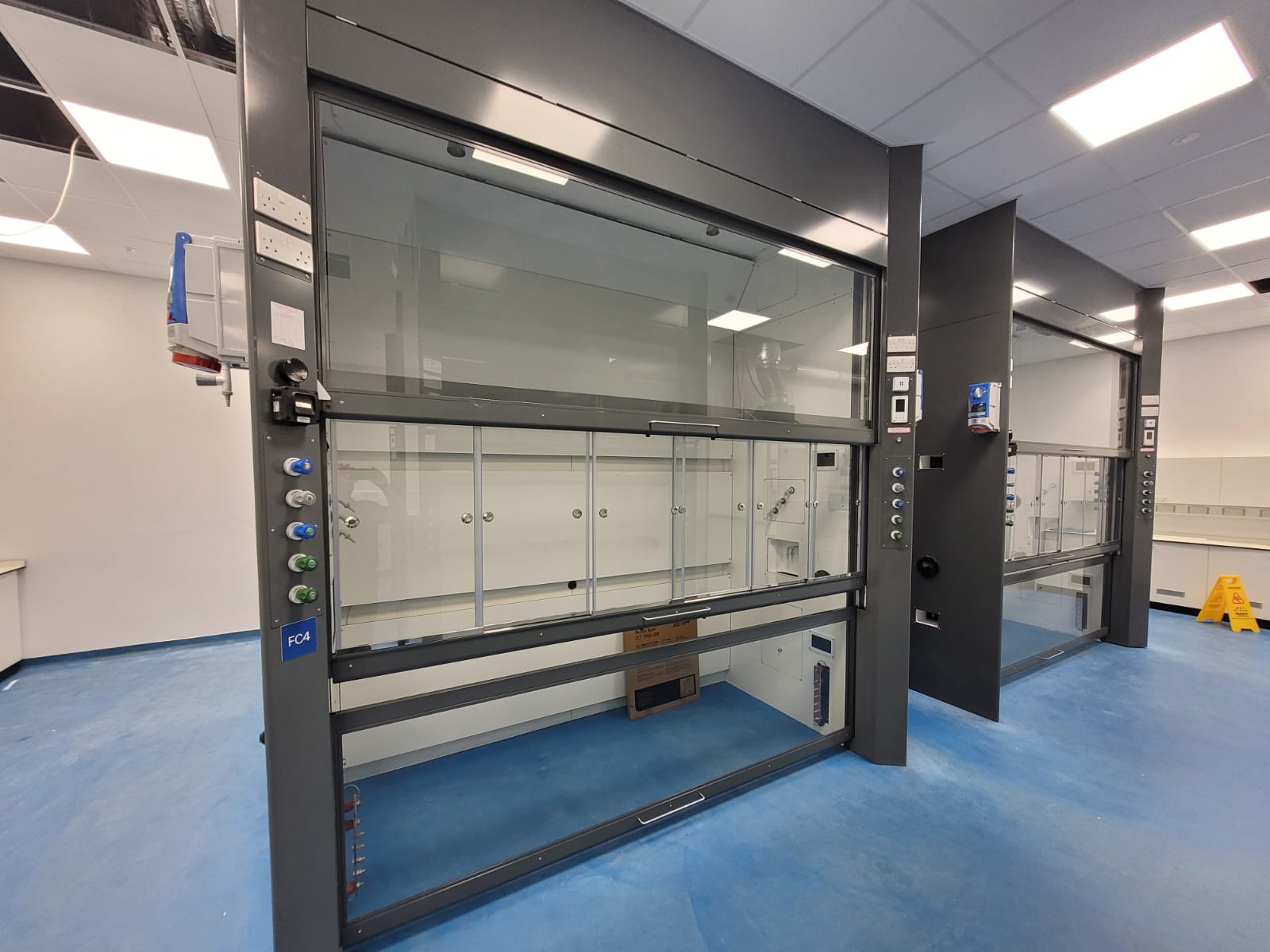
Installation of 9 Atex Rated Variable Air Volume Fume Cupboards with Fire Suppression.

Installation of nine ATEX-rated variable air volume fume cupboards with integrated fire suppression to support safe research in hazardous environments and improve energy efficiency across the laboratory estate. The brief combined safety, compliance and day-to-day usability with a strong emphasis on operability for client and auditor visits and technical walk-throughs, so the completed systems perform consistently during live procedures as well as routine bench work.

Overview
Overview
VentxLabs delivered a coordinated programme at Hexagon Tower for Colour Synthesis Solutions, a Manchester-based specialist in custom synthesis, contract research and analytical services with a strong focus on the chemistry of colour. As a provider operating to ISO 9001:2015, the company required enhanced fume extraction systems that pair robust safety with energy efficiency and a professional presentation for stakeholders.
The project centred on replacing and upgrading existing extraction with a new suite of ATEX-rated variable-air-volume (VAV) fume cupboards integrated with the building management system. The control logic ensures stable face velocity at open sash while trimming exhaust at closed sash to reduce conditioned-air loss without compromising containment. Installation and commissioning were carried out within live laboratory areas, with finishes and services tied neatly into existing infrastructure to preserve uptime and workflow continuity. The result is a safe, energy-efficient extraction platform that supports the company’s ongoing colour-chemistry work.
Challenges
Challenges
The site runs a wide range of processes with varying hazard levels, placing fluctuating demand on extraction. Constant-volume systems would have wasted energy and increased noise, while poorly tuned VAV control risked inconsistent containment. Because Colour Synthesis operates within a multi-tenant facility with legacy plant, integration with the existing BMS had to be robust, clearly documented and easy for operators to interpret.
Another key requirement was in-enclosure incident control. Each fume cupboard needed rapid detection and localised fire suppression to contain any issue before it spread. The installation also had to be sequenced carefully to avoid disruption to neighbouring labs, with works phased and isolated to maintain ongoing operations.
Approach
Approach
VentxLabs began with a detailed survey, airflow readings and a services audit to define the integration points and ensure the new systems aligned with site infrastructure. Face velocity targets were agreed with the client, and sash sensors, duct sensors and damper control were developed under a unified logic so supply, extract and make-up air respond as one system.
The control strategy was tested against potential failure modes, power loss, network drop or sensor error, to confirm safe default behaviour. Interfaces with the building management system were simplified so operators can quickly see live status, alarms and set-points without navigating complex menus.
Because the work was limited to extraction systems rather than full fit-out, coordination with existing benches, services and finishes was critical. Installation sequencing was aligned with the client’s production schedule, minimising downtime and maintaining safe access to adjacent work areas
Solution
Solution
Nine ATEX-rated VAV fume cupboards were installed and commissioned with full building-management integration and built-in fire suppression. The control system maintains stable face velocity at open sash and reduces exhaust when closed, cutting energy use while preserving containment. Pressure balance between connected rooms remains steady, and alarm thresholds were tuned to prompt timely user action without nuisance trips.
Lighting and finishes local to the cupboards were refreshed to maintain visibility and hygiene standards. The extraction plant and associated ductwork were configured for accessibility and future maintenance, with provisions for additional monitoring points and filter upgrades if required.
Users report quieter operation, more stable airflow and a noticeable improvement in comfort at the bench. Facilities teams benefit from clearer tagging and documentation, and management can demonstrate measurable reductions in exhaust volumes as part of a broader energy strategy.
The project strengthened Colour Synthesis Solutions’ laboratory infrastructure at Hexagon Tower modernising its extraction systems while supporting its research continuity and maintaining high safety and compliance standards.